Britain and the British meet African-American people:
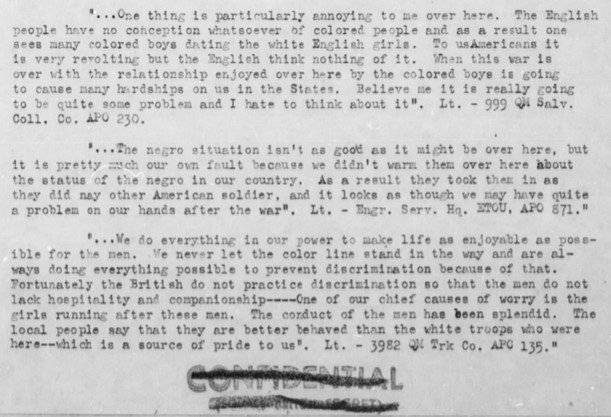
Although the South of the country offered a better military position, in terms of defence, they were also in constant alert due to the strong possibility of being invaded and attacked quite brutally, so the North of the country offered hidden potential, more space to hide military bases, and great options to support military training. From the 1.5 million of American troops arriving in Britain, between 10% and 20% were Black, arriving completely oblivious of what segregation represented to British people. British people were friendly, protective, making them feel like ‘people’ for the first time in their lives, as they were treated by British people amicably and humanely, which was fundamental for a complete change in the way they perceived the world.
After their interaction, nothing remained the same, either for these Black Americans, for the British or for America, as attitudes towards racism, segregation and discrimination were condemned. Black people realised that they had the same rights to live a life at the same level of White people, participating and eventually changing laws and behaviours.When the WW2 ended, and they returned to America, the freedom experienced by Black troops and what it felt to be treated as people, with the same rights and opportunities, pushed them to rebel and fight for their rights. And they were not going to let it go.This means that the changes in Black people’s rights in America, started, indeed, due to the British refusal to ostracise African-American soldiers and segregate them, as Americans wanted to enforce, and the same happened in other countries where Black troops were stationed.
The American Government was shocked by the way African-American troops were treated by the British, and, especially, by the relationship between them and White British women.
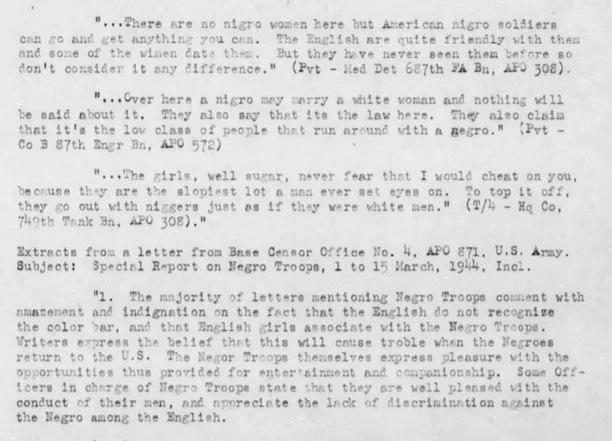
(Source: Fold3, US, WWII European Theater Army Records, 1941-1946)